Water damage insurance in North Carolina
Water damage insurance in North Carolina turns on where the water came from. A sudden leak inside a Raleigh home usually falls under the homeowners policy; creek or street water needs a separate flood policy. The NC Department of Insurance sets the ground rules below: claim acknowledgment within 30 days, mediation after declared disasters, and licensed public adjusters.
By Raleigh Water Damage NC · Updated
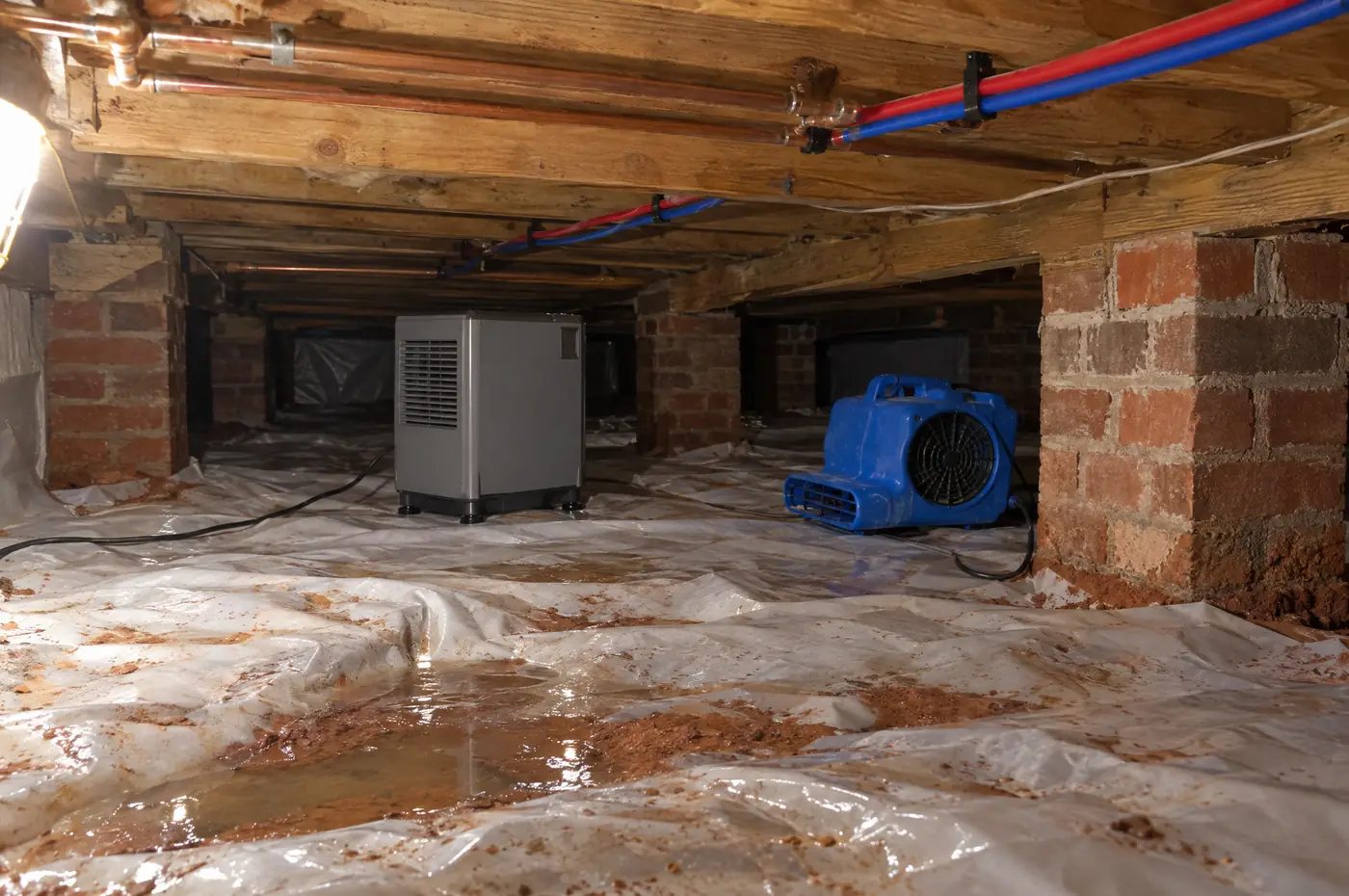
Illustrative photo.
Key facts
- The insurance company should acknowledge your claim within 30 days. North Carolina sets no fixed number of days to settle it, because each claim differs. (NC Department of Insurance: FAQs About Homeowners Insurance)
- Homeowners policies do not cover flood or rising water. Flood coverage is a separate policy, usually through the National Flood Insurance Program. (NC Department of Insurance: FAQs About Homeowners Insurance)
- After a declared disaster, the Commissioner of Insurance can open the Disaster Mediation Program for denied or partly denied homeowners claims of at least $1,500. You must ask within 60 days of the denial, the insurer pays the cost, and NFIP flood claims are not included. (NC Department of Insurance: Disaster Mediation)
- Public adjusters must hold a North Carolina license. For a catastrophic incident their fee is capped at 10 percent of the settlement, and you can cancel a signed contract in writing within three business days. (NC Department of Insurance: A Consumer's Guide to Public Adjusters)
Which policy usually applies
Pick the source of the water. Each answer says what usually applies and what to watch for; your policy has the final word.
Usually homeowners coverage
Water that escapes all at once from plumbing or an appliance is the kind of loss a standard homeowners form is written around, after the deductible.
What it usually involves
- Removing the water and drying the house
- Opening walls or floors where that is needed to dry them
- Putting finishes back once the structure is dry
Watch for
- The part that failed (the pipe, the tank, the hose) is usually its own repair
- Freeze damage can be excluded if a house was left unheated without the water shut off and the lines drained
General information, not insurance advice. Your policy and declarations page decide.
Often excluded
Many policies exclude water that seeped or leaked again and again over time. A slow drip under a vanity found months later often lands here.
What it usually involves
- The policy wording decides; look for "repeated seepage" or "continuous leakage"
Watch for
- Stop the leak quickly either way, because mold can start within a day or two
- Dated photos and moisture readings show what was wet and when
General information, not insurance advice. Your policy and declarations page decide.
Needs a water backup endorsement
Water that comes up through a toilet, tub or floor drain is excluded from many base policies. If you added a backup endorsement, it usually has its own limit.
What it usually involves
- With the endorsement: cleanup, disinfection and drying up to its limit
Watch for
- Look for "water backup" on the declarations page
- Raleigh Water takes backup reports at 919-996-3245 if the city main may be the cause
General information, not insurance advice. Your policy and declarations page decide.
Needs a flood policy
The NC Department of Insurance says homeowners policies do not cover flood or rising water. Creek and street water needs a flood policy, usually through the National Flood Insurance Program.
What it usually involves
- NFIP building and contents coverage are separate parts of the flood policy
Watch for
- The City of Raleigh says its residents get a 25 percent lower flood insurance premium
- A homeowners policy and a flood policy are separate contracts with separate deductibles
General information, not insurance advice. Your policy and declarations page decide.
Usually homeowners, check the storm deductible
Rain that came in because wind first broke the roof, a window or a wall is usually treated as a wind loss. Some North Carolina policies carry a separate named-storm, windstorm or hail deductible.
What it usually involves
- Drying the inside and the materials the rain reached
Watch for
- Water rising from outside is flood, not wind
- Write down how the water got in: through damage, or up from the ground
General information, not insurance advice. Your policy and declarations page decide.
Depends on the source
Groundwater and surface water that seep in after rain are often treated as flood or as a maintenance issue, while a broken pipe under the house is a sudden water loss.
What it usually involves
- The water damage and exclusions sections of the policy decide
Watch for
- Note whether the water appears only after rain or all the time
- A broken line on your side of the property line is your repair under Raleigh Water's rules
General information, not insurance advice. Your policy and declarations page decide.
North Carolina claim rules
- The insurance company should acknowledge your claim within 30 days. North Carolina sets no fixed number of days to settle it, because each claim differs. (NC Department of Insurance: FAQs About Homeowners Insurance)
- If you take an actual cash value payment first, you have 180 days after the loss to claim the rest under the policy's replacement cost terms. (NC Department of Insurance: FAQs About Homeowners Insurance)
- Homeowners policies do not cover flood or rising water. Flood coverage is a separate policy, usually through the National Flood Insurance Program. (NC Department of Insurance: FAQs About Homeowners Insurance)
- The NC Department of Insurance says a deductible can be a fixed dollar amount or a percentage of the dwelling coverage, and some policies carry a separate windstorm, hail or named-storm deductible; the declarations page lists yours. (NC Department of Insurance: FAQs About Homeowners Insurance)
The department's claims page also says to make temporary repairs only to protect the house from more damage, keep the receipts, photograph and list the damage before those temporary repairs, and hold off on permanent repairs until the insurer has inspected and you have agreed on the cost. Most homeowners policies pay additional living expenses while a house is being repaired, up to the policy's limits, so keep every receipt. (NC Department of Insurance: Claims and Adjuster Information)
Flood insurance in North Carolina and Raleigh
Homeowners policies do not cover flood or rising water, according to the NC Department of Insurance; that takes a flood policy, usually through the National Flood Insurance Program. In Raleigh the risk is mostly creek flooding: the National Weather Service says Crabtree Creek reaches the basements of the low-lying homes on Claremont Drive at 16 feet on the Anderson Drive gauge. The City of Raleigh says its residents get a 25 percent lower premium on flood insurance policies, and its Flood Information Portal shows the flood risk for one address.
FEMA's records show 1,259 NFIP flood claims in Raleigh's 15 home ZIP codes, with $26,122,645 paid, 336 of them with a 1996 date of loss, the year of Hurricane Fran. The flood risk by ZIP page has the count for each ZIP, and the Raleigh flooding history has the storms behind them.
The Disaster Mediation Program
North Carolina General Statutes 58-44-70 through 58-44-120 set up a mediation program for disputed homeowners claims after a disaster, and 58-44-80 requires insurers to tell first-party disaster claimants in the affected counties that they can mediate (NCDOI Bulletin 24-B-14: Activation of the Disaster Mediation Program (October 28, 2024)).
- It runs only after the Governor or the President declares a disaster and the Commissioner of Insurance activates it for that event.
- The claim must be denied in whole or in part, and the dispute must be at least $1,500 unless both sides agree to a smaller one.
- You must ask within 60 days after the denial, by telling your insurer or the program administrator.
- The insurer pays the cost. National Flood Insurance Program claims are not part of it.
Source: NC Department of Insurance: Disaster Mediation. The statute pages on ncleg.gov could not be opened from our research machine; the section numbers above are as the Department of Insurance cites them.
Public adjusters in North Carolina
- Public adjusters must hold a North Carolina license. For a catastrophic incident their fee is capped at 10 percent of the settlement, and you can cancel a signed contract in writing within three business days.
- If the insurer offers your full policy limits within 72 hours of the reported loss, a public adjuster cannot take a percentage of it and may charge only a reasonable fee for time and expenses.
- Check a public adjuster's license with the Department of Insurance at (855) 408-1212 before you sign anything.
Source: NC Department of Insurance: A Consumer's Guide to Public Adjusters. Company and independent adjusters are paid by the insurer; you pay a public adjuster, per the department's claims page.
Complaints to the NC Department of Insurance
The Department of Insurance's Consumer Services Division, (855) 408-1212 on weekdays from 8 a.m. to 5 p.m., forwards your complaint to the insurer and requires a response. It cannot set the value of a claim or act as your lawyer. (NC Department of Insurance: Have a question about your insurance or a claim? Give us a call) The mailing address is 1201 Mail Service Center, Raleigh, NC 27699-1201.
The NC FAIR Plan, the inland insurer of last resort
The NC FAIR Plan is the state's market of last resort for dwelling fire coverage everywhere except the beach area, with a building limit of $1,000,000 and contents capped at 40 percent of the building amount. The plan is not part of state government, but the Commissioner of Insurance reviews and approves its plan of operation. The Coastal Property Insurance Pool, once called the Beach Plan, covers the beach area instead. (NCJUA/NCIUA: the North Carolina FAIR Plan)
Renting in Raleigh
Legal Aid of North Carolina advises tenants to put repair requests in writing (a note, email or text) and keep a record of the date. Its guidance says tenants generally keep paying rent after damage unless there is an agreement or a court order, and a tenant whose home is not habitable must give written notice within 10 days of the damage to end the lease, unless the lease says otherwise. (Legal Aid of North Carolina: Tenants' rights after a natural disaster)
Licenses, briefly
North Carolina licenses general contractors on projects of $40,000 or more and licenses plumbers, but it has no mold remediation license. The North Carolina contractor and mold license guide explains which lookup to use.
Raleigh Water Damage NC is a referral line, not an adjuster or a contractor; how the line works and how it is paid is on the About page.
Questions people ask
Does homeowners insurance cover water damage in North Carolina?
Sudden water from a burst pipe or a failed appliance is the kind of loss a standard homeowners policy is written to cover, after the deductible. Flood and rising water are not covered by homeowners policies, according to the NC Department of Insurance, and slow leaks and drain backups are often excluded unless an endorsement was added.
Does insurance cover mold remediation in North Carolina?
Many policies limit mold to a small sub-limit or exclude it, while the sudden leak that caused it may be treated separately. The mold wording and any endorsement on your declarations page decide. North Carolina has no state mold license, so ask how the crew will document dryness before closing walls.
How do I file a complaint with the NC Department of Insurance?
Call the Consumer Services Division at (855) 408-1212 on weekdays from 8 a.m. to 5 p.m., or use the request-for-assistance form on ncdoi.gov. The department forwards your complaint to the insurance company and requires a response, but it cannot decide the value of a claim or act as your lawyer.
Does a Raleigh restoration company negotiate with my insurer for me?
Raleigh Water Damage NC does not negotiate claims. The NC Department of Insurance points homeowners who want help with a large or complicated claim to a public adjuster, who must hold a North Carolina license, or to a private attorney who handles insurance claims. A restoration company can give you its photos, moisture readings and itemized estimate.
What is the NC FAIR Plan?
It is the state's market of last resort for dwelling fire coverage everywhere except the beach area, created by the General Assembly in 1969. The building limit is $1,000,000 and contents are capped at 40 percent of the building amount. Its line is 1-800-662-7048, and an agent can place coverage there.
Cite this page: “Water damage insurance in North Carolina.” Raleigh Water Damage NC, https://raleighwaterdamagenc.com/water-damage-insurance-north-carolina. Updated November 13, 2026.